

I recently had the opportunity to join Fisheries and Oceans Canada staff for a day of invasive fish species surveillance on the St. Lawrence River. The targeted invasive species for this surveillance initiative were Grass Carp and Tench. This was a fascinating experience from start to finish! I have partnered with Asian Carp Canada and the Invasive Species Centre on a variety of awareness campaigns over the past few years, and am grateful to work with them once again for this blog post. Having the chance to get out in the field and seeing this important work conducted first hand was a definite highlight for me!
My Day on the Water with DFO
My day began meeting up Fisheries and Oceans Canada (DFO) staff, Greg, Trisiah, and Taryn at a boat launch in Cardinal, Ontario. After introductions and chatting about plans for the day, they launched the research vessel and we were on our way to the first site they had selected for surveillance.
Setting Mini Fyke Nets
Upon arrival at the first site, the technicians recorded environmental data using various instruments. Some of the data they collected included: water and air temperatures, water quality parameters, river substrate, and aquatic and riparian vegetation.

Photo: Greg, a technician with DFO, deploying a multiparameter probe to collect water quality data (e.g., dissolved oxygen, conductivity, and pH).
Greg then donned a pair of waders and got into the water to set mini fyke nets, which they would return to collect the next day. Fyke nets are a type of fish trap typically set from shore in shallow waters. Their funnel-shaped design, supported by hoops or frames, guides fish into an enclosed section from which it is difficult to escape. Fyke nets allow fish to be captured while remaining in the water, minimizing harm.

Photo: Greg setting out a mini fyke net in a shallow bay.
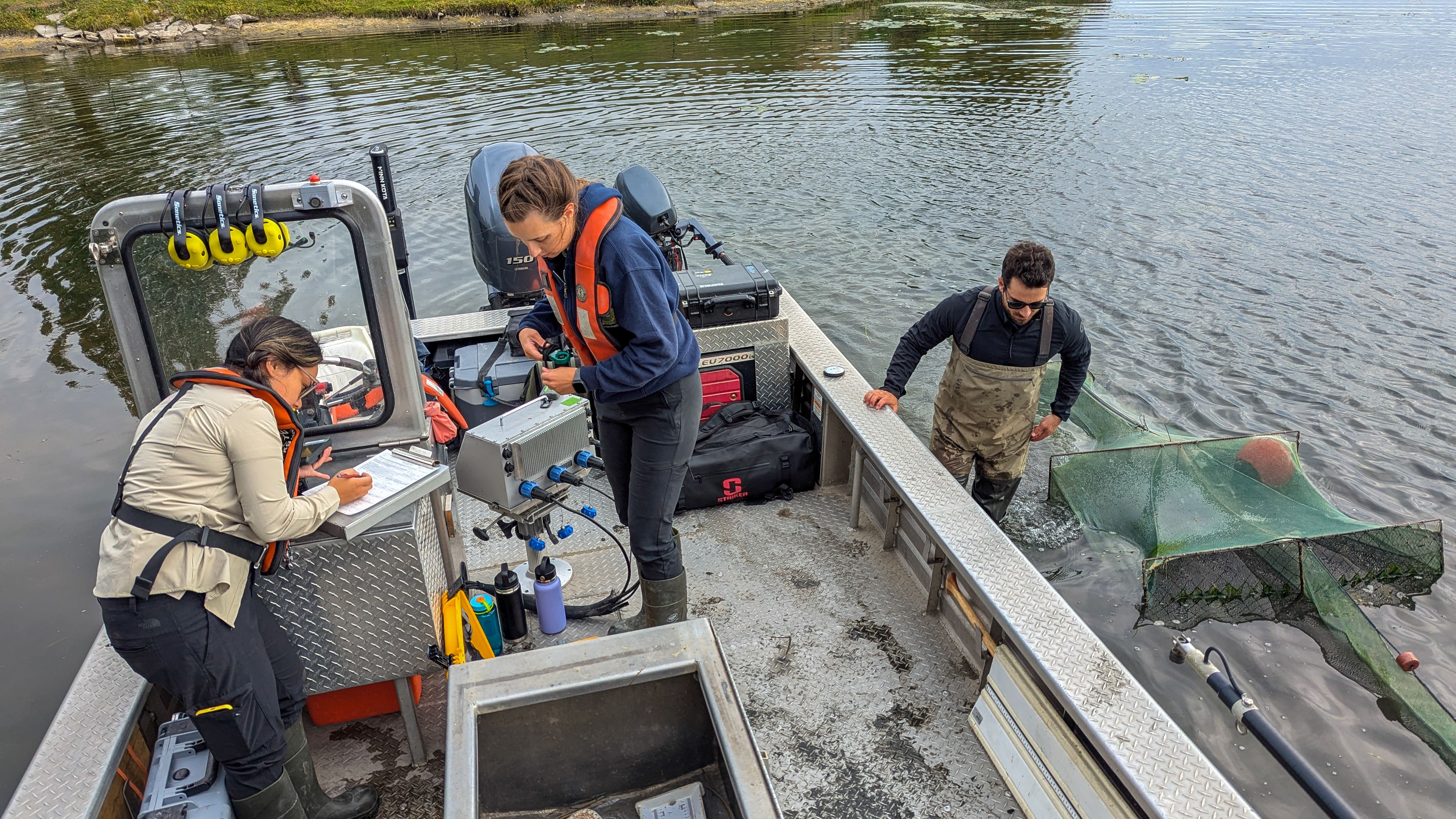
Photo: Trisiah and Taryn, left, recording data. Greg, right, reboarding the vessel after setting a mini fyke net.
Electrofishing


Photos: DFO staff aboard the research vessel conducting electrofishing.
I was most looking forward to the electrofishing portion of this outing as I had not seen this in person before. If you’re not familiar, electrofishing is a survey method used in scientific research to sample fish populations and determine their abundance, among other things. It employs direct current electricity to temporarily stun nearby fish, affecting their movements. This technique enables the capture of fish for data collection before they are released. If captured, invasive species are not released.
For safety reasons, I was not able to be aboard the research vessel while DFO staff were conducting electrofishing. I was dropped off on shore nearby and was able to observe this team in action. It was incredibly neat to watch!

Photo: Myself on shore observing as the DFO crew conducted electrofishing.
One person drove the boat, while the other two stood at the bow with long nets, quickly scooping up any stunned fish and placing them in a large livewell on the deck. They would cover an area for several minutes. I then rejoined them once they finished and came ashore. The team recorded environmental data for each site, as well as biological data from fish that were captured. This included species type, length, and total number of individuals caught, as well as a photo voucher of each species. Native fishes, which were all that were captured on this day, were then released back into the river.
Fish Species Captured & Released
It was amazing to get to see the wide range of fish species which were captured while electrofishing. Some of the species included: Emerald Bowfin, Brown Bullhead, Northern Pike, Largemouth Bass, Yellow Perch, Walleye, Rockbass, a wide range of baitfish species, and more. No Grass Carp or Tench were captured during this outing.

Photo: DFO staff with a large Emerald Bowfin that was captured via electrofishing and then released.
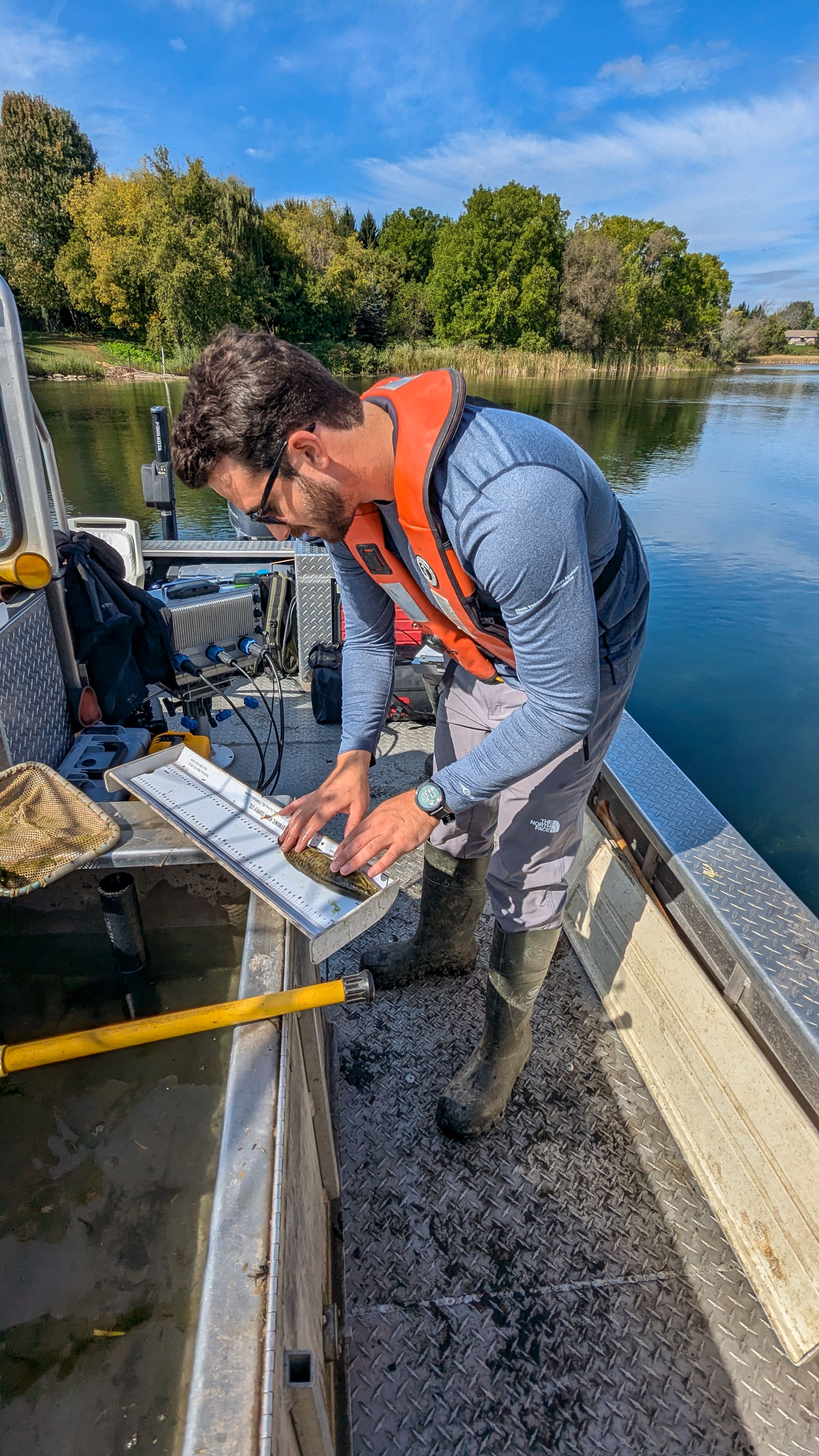
Photo: Greg measuring a small Emerald Bowfin. The length of the captured fish was one of the data points collected during electrofishing.
The Angler Connection to Invasive Species Awareness
Tench and Grass Carp thrive in slow-moving freshwater environments like rivers, lakes, and ponds with abundant vegetation. Tench competes with native species like minnows, bullheads, and suckers by eating significant quantities of snails and insect larvae. These feeding tendencies could threaten other species and biodiversity, including populations of sought-after game fish, by increasing competition for food, degrading water quality, and promoting algal blooms.
Grass Carp compete with native species for food and other resources, particularly aquatic vegetation that many fish species rely on for habitat and foraging. Due to their voracious diets, Grass Carp could negatively impact a number of fish species in the Great Lakes. This includes popular sportfish like Walleye, Smallmouth and Largemouth Bass, Muskellunge, Yellow Perch, and Northern Pike.
Due to our frequent presence on the water, we, as anglers, play the most crucial role in preventing the spread of invasive species. It is important to learn how to identify Grass Carp, Tench, and other invasive species, and follow proper reporting protocols.
If you think you have captured a Grass Carp or any other aquatic invasive species, call the Invading Species Hotline (1-800-563-7711) and DO NOT release it back into the water!
Click here to view the Grass Carp Identification & Reporting Guide:
Click here to learn more about Tench:

Photo: Myself with DFO staff.
A huge thank you to the Fisheries and Oceans Canada team, Greg, Trisiah, and Taryn, for the opportunity to be part of this very informative day. It was a memorable experience for me! Thank you to Asian Carp Canada and the Invasive Species Centre for partnering with me on this important campaign.
Subscribe to Ashley’s posts:
Your message has been sent

Leave a Reply